
列車向南,下一站香港|蛛網膜下腔出血患者的高鐵醫療轉送
診斷 Diagnosis:蛛網膜下腔出血 / Subarachnoid hemorrhage
服務 Provider:MedCare Medical Assistance
醫生說「蛛網膜下腔出血」,是甚麼意思?
家人突然住院,醫生說「蛛網膜下腔出血」。當下可能來不及問,走出病房才想起:血是流到哪裏?有多危險?人已經清醒了,為甚麼醫生還要再觀察?
When a family member is diagnosed with subarachnoid hemorrhage, the first questions are often where the bleeding occurred, how serious it is and why observation may still be needed after the patient wakes up.
「蛛網膜下腔」是腦表面周圍一個有腦脊液流經的空間。血液流進這個空間,就叫蛛網膜下腔出血,是需要緊急處理的病況。突然出現異常劇烈的頭痛,尤其伴隨嘔吐、頸部僵硬或意識改變,應立即求醫。
Subarachnoid hemorrhage (SAH) is bleeding into a space around the brain. It is a medical emergency. A sudden, extremely severe headache, especially with vomiting, neck stiffness or a change in consciousness, requires urgent medical attention.
看見家人清醒、能說話,當然值得鬆一口氣。主診團隊仍須考慮出血原因、近期檢查及病況變化。以腦動脈瘤破裂造成的出血為例,醫護會留意再出血、腦積水或延遲性腦缺血等併發症。這是其中一種病因,並不表示陳先生的出血由腦動脈瘤破裂所致。
Being awake and able to respond does not answer every clinical question. The treating team considers the cause, recent findings and any changes in the patient's condition. After aneurysmal bleeding, complications can include rebleeding, hydrocephalus or delayed cerebral ischemia. An aneurysm is one possible cause and is not identified as the cause in this case.
如果家人已經住院,可以先問主診醫生三件事:出血原因清楚了嗎?接下來要觀察甚麼?甚麼時候適合做轉送評估?
Ask the treating team whether the cause is known, what still needs monitoring and when it would be appropriate to assess the patient for transfer.
疾病資料參考:NICE:蛛網膜下腔出血的辨識與動脈瘤性出血指引。
MedCare 規劃北京至香港的轉送路線
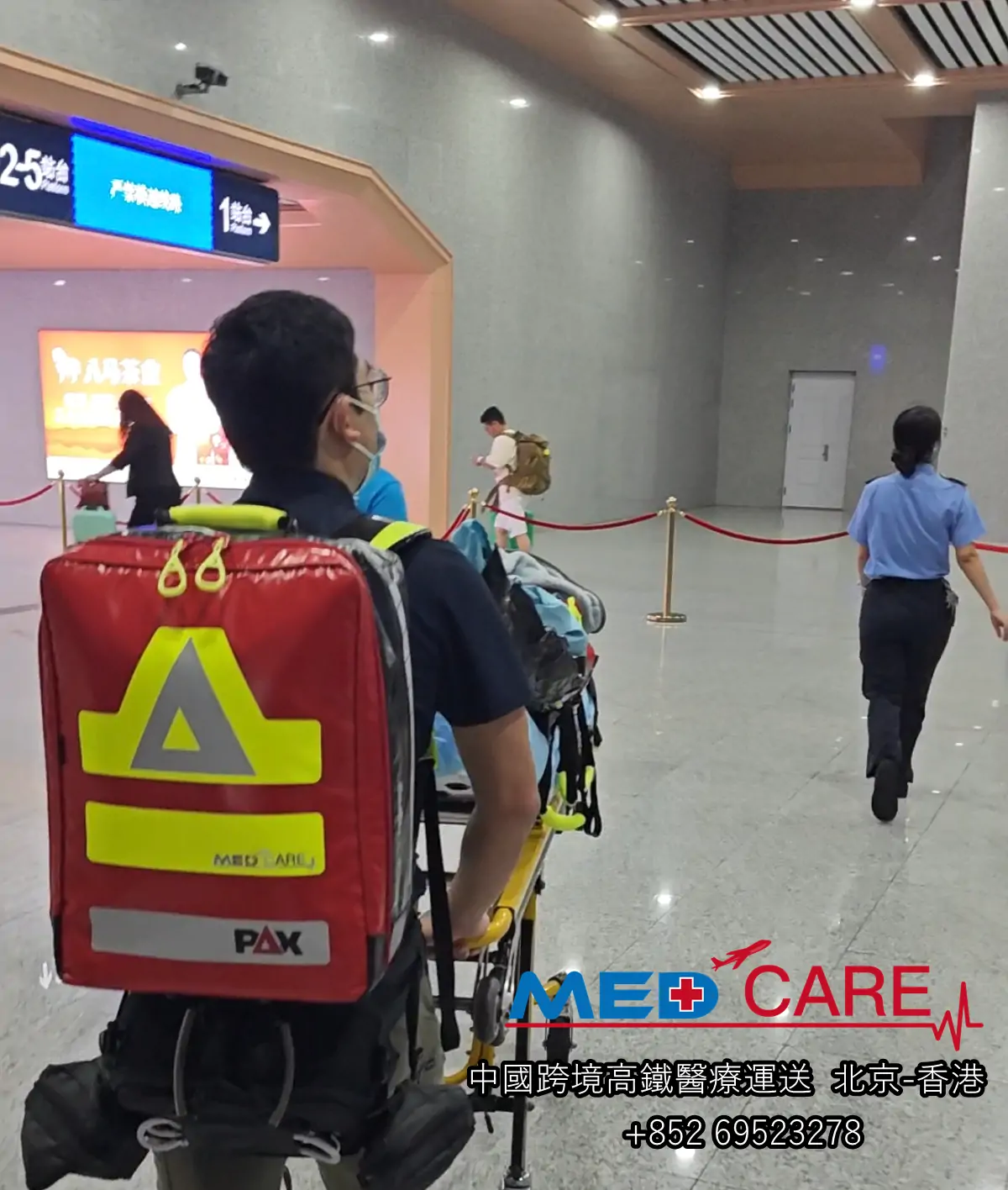
陳先生在北京接受治療。病況逐漸平穩後,家人希望他到香港繼續治療。從北京病房到香港接收醫院,中間有搬運、候車、乘車,還要接上抵港後的救護車。每一段需要怎樣照護,都要在出發前想清楚。
Mr. Chan received treatment in Beijing. As his condition stabilized, his family considered continuing treatment in Hong Kong. The transfer plan had to account for leaving the ward, waiting at the station, travelling by train and connecting to an ambulance after arrival.
第一階段:遠程會診與床旁評估
轉送團隊先與院方遠程會診,了解陳先生近期的病況與治療,再到床旁評估。完成兩項評估後,團隊才確定採用高鐵轉送,安排兩名醫護隨車。
The transfer team consulted remotely with the hospital to understand Mr. Chan's recent condition and treatment, then carried out a bedside assessment. The team confirmed the rail transfer after both assessments and arranged for two medical professionals to accompany him.
第二階段:候車與登車前,要確認甚麼?
家屬等的是列車進站,醫護要考慮的是病人從離開病房到登車之間有沒有變化。一般安排會按個別照護計劃,確認候車期間需要哪些觀察、設備是否準備妥當,以及如何銜接登車。如果病況有變,醫護會重新評估能否按原計劃出發。
Before boarding, the escort team plans what monitoring the patient may need at the station and checks equipment readiness and boarding arrangements. A change in the patient's condition may require the team to reassess the plan.
對需要持續供氧的病人,設備續航不能只按列車行駛時間估算。地面接送、候車、延誤及抵港後交接也要一併考慮。家屬出發前可以問:如果列車晚點,病人的照護和供氧怎樣接續?
For patients who need continuous oxygen, the plan accounts for ground transport, station waiting, possible delays and handover, as well as the time on the train.
列車開了,兩名醫護一路隨行
高鐵駛離北京,兩名醫護陪在陳先生身旁,按轉送計劃照顧他。這趟車程中,團隊使用便攜式製氧機(POC),以每分鐘 3 公升(3 L/min)的持續流量為陳先生供氧。
Two medical professionals accompanied Mr. Chan on the high-speed train from Beijing to Hong Kong. During the rail journey, a portable oxygen concentrator (POC) provided continuous-flow oxygen at 3 litres per minute (3 L/min).
車票上寫的是出發和到達時間。醫護要考慮的還有病人的呼吸、血氧、設備運作及剩餘行程。每一位患者的供氧方式與流量都須按個別需要評估。
The escort plan considers breathing, oxygen saturation, equipment function and the remaining journey time. The oxygen delivery mode and flow rate are assessed individually for each patient.
第三階段:抵達香港,救護車接往醫院
列車抵達香港後,陳先生由接應的救護車送往接收醫院。到院後,轉送團隊與接收醫護交接,由院方接手後續治療。
On arrival in Hong Kong, an ambulance took Mr. Chan to the receiving hospital. The transfer team handed over his care to the hospital team for continued treatment.
到了接收醫院,這趟轉送才算完成
車票上的終點是香港。對陳先生來說,真正的到站是在接收醫院的病床旁。從北京的床旁評估,到高鐵上兩名醫護隨行,再到香港的救護車接送,每一段安排都為下一段交接作準備。
The train journey ended in Hong Kong. The medical transfer ended at the receiving hospital. The bedside assessment, the escort on the train and the onward ambulance each supported the next stage of care.
北京至香港高鐵醫療護送案例資料
| 路線 Route | 北京醫院 → 香港接收醫院 |
|---|---|
| 病況 Condition | 蛛網膜下腔出血 / Subarachnoid hemorrhage |
| 出發前評估 Assessment | 遠程會診及床旁評估 / Remote consultation and bedside assessment |
| 途中護送 Medical Escort | 兩名醫護乘高鐵陪同 / Two medical professionals on board |
| 高鐵途中供氧 Oxygen on Board | 便攜式製氧機(POC),持續流量 3 L/min |
| 抵港安排 Arrival | 救護車接送至接收醫院 / Ambulance transfer to the receiving hospital |
家屬常問:蛛網膜下腔出血後,怎樣安排轉院?
蛛網膜下腔出血患者,病情穩定就能搭高鐵嗎?
能否乘搭高鐵,要由主診及轉送醫護按病況評估。醫護會考慮近期病況、病人能否承受搬運和長途乘車、途中需要甚麼監護或供氧,以及接收醫院的交接安排。
Can a patient recovering from subarachnoid hemorrhage travel by high-speed rail?
The treating and transport teams assess whether the patient can tolerate the journey and whether the required care can be maintained throughout the transfer.
北京至香港高鐵醫療轉送,可以持續供氧嗎?
陳先生在本案的高鐵途中,以便攜式製氧機按 3 L/min 持續流量供氧。其他患者的供氧模式和流量須個別評估,並於出發前確認設備能力、續航,以及鐵路營運方的攜帶與使用安排。
Can continuous-flow oxygen be provided during a Beijing–Hong Kong rail transfer?
In this case, a portable oxygen concentrator delivered continuous-flow oxygen at 3 L/min on the train. Other arrangements depend on the patient's needs, equipment capacity and runtime, and railway requirements.
想從北京轉到香港醫院,家屬可以先準備甚麼?
可先問主診醫生是否適合開始轉送評估。查詢時,說明目前所在醫院、簡要診斷、病人是否需要平臥或吸氧,以及是否已有香港接收醫院。正式出發前須落實接收安排。
What should families prepare for a transfer enquiry?
Share the current hospital, a brief diagnosis, any need to lie flat or use oxygen, and whether a receiving hospital in Hong Kong has been identified.
相關醫療運送服務
如果你正在為家人考慮轉院
可先告訴 MedCare 家人目前所在的醫院、主診醫生的建議,以及你最擔心行程中的哪一段。我們可協助釐清轉送評估與接收醫院交接需要準備的資料。
Contact MedCare to discuss the current hospital, the treating team's advice and the part of the journey that concerns you most.
24 小時 WhatsApp 聯絡我們+852 6952 3279 直接撥打 24 小時熱線
+852 6952 3279
本文記錄 MedCare 已完成的醫療轉送案例。個別患者的運送安排須經專業醫療評估,並符合相關運輸機構要求。
This article describes a completed MedCare medical transfer. Individual transport arrangements require professional medical assessment and must meet the relevant transport operator requirements.